.jpg)

By Kevin Buckley, Founder of Studio KB
For decades, one of the first questions in post-production was simple: what needs to go?
A telephone pole behind the car. A bad reflection in the paint. A wrinkle in fabric. A distracting background element. A shadow that pulls the eye away from the product. A large part of high-end retouching has always been the art of removing what interrupts the image.
That work is not going away. But generative AI has changed the next question.
The modern creative director, art director, and retoucher now need to ask: What can we add to make this image clearer, stronger, and more intentional?
That shift matters. When post-production moves from cleanup to contribution, the role of art direction changes with it.
Retouching Has Always Been About Control
The best retouching rarely announces itself. It removes distractions, resolves issues, improves product accuracy, controls reflections, balances color, refines skin, simplifies backgrounds, and helps the viewer focus on what matters.
In advertising, that control is not cosmetic. It is strategic.
A campaign image has a job to do:
- It needs to communicate quickly.
- It needs to support the brand.
- It needs to survive approvals.
- It needs to work across layouts, crops, formats, and media buys.
- It needs to feel effortless—even when the production behind it was anything but.
Historically, much of that work happened through subtraction. Remove the thing that does not belong. Simplify the frame. Quiet the noise. Protect the product. Preserve the photograph.
That still matters. But now, subtraction is only half the conversation.
The New Creative Question: What Should We Add?
Generative AI has made it easier to add image elements that previously required a reshoot, a CGI build, a stock search, or a long compositing process.
That does not mean every image needs more. Most images do not. But it does mean art directors and retouchers have a larger creative toolbox.
The question is no longer only, “What is wrong with this image?” The question is also, “What could make this image work harder?”
That might mean adding:
- Alternate backgrounds
- Cleaner reflections
- More useful negative space
- Product-supporting details
- Weather, dust, smoke, haze, or motion cues
- Lifestyle context
- Props that clarify the story
- A more intentional sense of place
- Extensions for framing for social, OOH, web, and print layouts
The important word here is intentional. The goal is not to add things just because the tool can generate them; the goal is to add only what helps the image communicate. A good addition should feel like it always belonged there.
Addition Is More Dangerous Than Removal
Removing a distraction usually makes an image quieter. Adding something changes the meaning of the image.
That makes additive retouching powerful, but also risky. A new object can help tell the story, but it can also clutter the composition. A generated reflection can make a car feel more dimensional, but it can also break the lighting logic. A more dramatic sky can add emotion, but it can also make the image feel fake, heavy-handed, or off-brand.
This is where taste matters.
The best AI-assisted post-production is not about generating the most impressive option. It is about choosing the right option, then refining it until it holds up inside the final image. That means asking hard questions:
- Does this addition support the concept?
- Does it help the viewer understand the image faster?
- Does it improve the composition?
- Does it match the lighting direction?
- Does it respect the product?
- Does it feel photographed?
- Does it create an approval, legal, or brand issue?
- Would the image be weaker without it?
If the answer is no, it probably does not belong there.
Art Directors Need to Brief Additions More Clearly
In traditional retouching, art direction often focused on correction: Clean this up. Remove that. Make the paint smoother. Reduce the reflection. Match the color.
Those notes still matter. But AI-assisted post-production needs a different kind of direction. When you are adding to an image, vague feedback gets expensive fast.
“Make it more premium” is not enough.
Does premium mean cleaner? Quieter? More architectural? Atmospheric? Graphic? Restrained? Cinematic? Natural? Luxury retail? Automotive launch campaign? Those are very different images. The better the language, the better the result.
Before asking a retoucher to add something, art directors should define the purpose of the addition.
❌ Instead of saying: “Add more atmosphere.”
✅ Say: “Add a subtle amount of low desert dust behind the vehicle to create motion and scale, but keep it natural and secondary to the product.”
❌ Instead of saying: “Make the background more interesting.”
✅ Say: “Extend the environment with clean architectural forms that create depth, but keep the scene minimal enough for headline placement.”
❌ Instead of saying: “Make it feel more dramatic.”
✅ Say: “Add contrast and late afternoon warmth while keeping the paint color accurate and the lighting physically believable.”
That level of direction gives the retoucher something useful to build from.
The Best AI Work Still Depends on Traditional Craft
This is the part that gets lost in a lot of AI conversations. Generative tools can create options quickly. They can suggest details, extend backgrounds, fill missing areas, and help explore directions.
But they do not automatically understand the image.
They do not know the brand standard. They do not know whether the vehicle trim is correct. They do not know whether a reflection helps the form or fights it. They do not know whether a generated element will survive a client approval meeting.
That is still the job of experienced image-makers. The final image still depends on the same fundamentals:
- Light & Perspective
- Scale & Lens behavior
- Color & Product accuracy
- Composition
- Restraint & Taste
AI can generate material. It cannot replace judgment. That is why the future of retouching is not prompt-chasing. It is image direction.
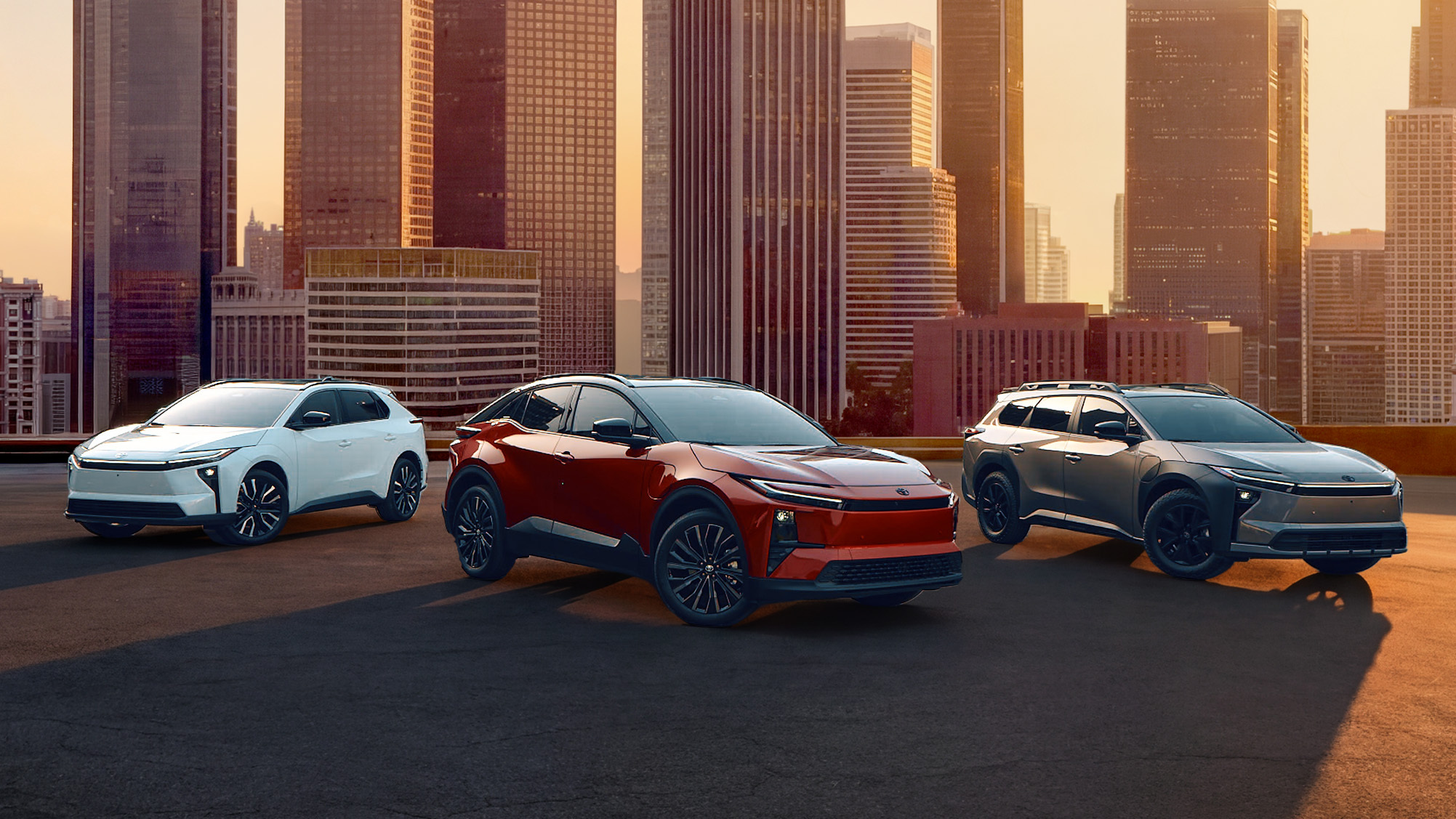
🚗 Case Study: Toyota BEV Campaign Assets
Studio KB saw this shift clearly while working with Overture Studios on a Saatchi & Saatchi LA production for Toyota’s BEV lineup.
The project required visually specific environments and product-correct vehicle imagery that still felt premium, believable, and campaign-ready. AI helped create new possibilities, but the final results depended on control. The vehicles needed to feel physically present. The lighting needed to make sense. The environments needed to support the concept without overpowering the product.
The final images still required compositing, retouching, product accuracy, and the kind of visual judgment that comes from years of high-end post-production.
That is the difference between using AI to generate imagery and using AI as part of a professional workflow. One creates options. The other creates approved campaign assets.
Producers Should Think of AI as Controlled Optionality
For art producers, the greatest value of AI-assisted post-production is not simply speed. Speed is useful, but it is not enough. The real value is controlled optionality.
AI can help a production team explore solutions before committing to a reshoot, a CGI build, or a completely new direction. It can adapt assets when the media plan changes, extend a campaign library, and create versioning for different formats and placements.
But optionality still needs boundaries. Someone needs to know which options are viable, which are off-brand, and which create approval risk. Experienced post-production filters endless possibilities into images that actually work.
Language Is Becoming a Core Retouching Skill
The next evolution in retouching will not be solely technical; it will be linguistic. A modern retoucher needs to understand light and perspective, as well as language.
That means understanding how words translate into images. It means knowing the subtle differences between cinematic, premium, raw, refined, natural, and editorial.
In AI-assisted workflows, the prompt is not just a command. It is a creative brief. The best retouchers will be the ones who can interpret creative direction, test it visually, reject what does not belong, and refine what does. Understanding language will become just as important as understanding light.
The Future of Post Production Is Additive, but Still Invisible
The future of retouching is not less craft. It is more responsibility.
Retouchers will still remove distractions and protect the product. But they will also be asked to contribute more directly to the story, the composition, and the emotional clarity of the image.
The best additions will not feel like AI. They will feel photographed, intentional, and inevitable. That is the standard. Not more for the sake of more. Not “AI look” for its own sake. Just stronger images.
The old question was, “What should we remove?”
The new question is, “What should we add?”
The best post-production teams will know when to ask for both.
Ready for Campaign Images That Do More Than Cleanup?
Studio KB helps agencies, photographers, and brands use generative AI, CGI, and high-end retouching to create campaign-ready visuals with realism, restraint, and control.
If your next project needs more than basic cleanup, let’s talk through what the image needs to communicate and how post-production can help get it there.
Share this post